

Lori GPT: The AI That Thinks Like a Human — research analysis
What is Lori GPT, and what can be verified?
Lori is a third-party AI chat companion offered through Apple's App Store, rather than evidence of an independently developed general artificial intelligence system. A current App Store listing titled AI Chat Companion - Lori identifies Kodeon, Inc. as the developer and describes availability for iPhone, iPad and Apple Watch. The older GIPResearch article presented Lori as an iOS chat client with customizable assistants and a conversational interface. Those statements should be read as a description of the product at the time, not proof that every earlier feature remains available or functions identically today. Before relying on a product feature for research, distinguish the developer's own listing, historical release notes, independent testing and direct observation on a specific device.
Source for this point: Apple App Store — AI Chat Companion Lori, developer Kodeon Inc. (First-party developer listing and dated release notes).
Replace “thinks like a human” with testable claims
The original headline is a promotional analogy, not a verifiable scientific finding. Fluent answers and a conversational interface do not demonstrate human-like consciousness, general reasoning ability, reliability or access to current information. A meaningful capability test asks a specific question: can the system summarize a provided source accurately, cite traceable references, handle contradictory instructions, follow a multi-step workflow or decline to invent missing information? Record the prompt, app version, model information if disclosed, input data, date and expected answer. Results should be scored against a human-verified reference set. Without that design, testimonials about being 'intuitive' or 'smart' say little about whether the app can support legal or technical research.
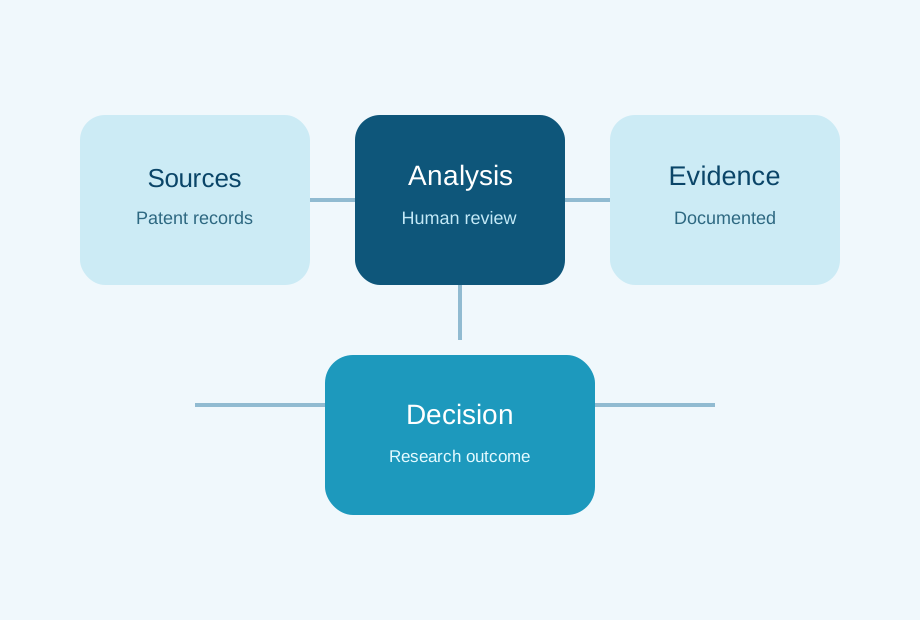
Establish the product and model architecture separately
An App Store page can verify a product's distribution identity, but not necessarily the exact underlying model, its training data, provider contracts or processing architecture. The historical Lori app description referred to OpenAI-powered features and an option to use a user's own API key. Such statements should be labeled as developer descriptions at the relevant release date. They do not prove that the current app uses a particular model for every request, or that a feature is available in every country or subscription tier. A responsible product-intelligence record includes developer, store identifier, published version history, supported devices, official privacy notice and clearly marked unknowns about the underlying processing stack.
Compare version history with independently observed behavior
The App Store version history documents updates across 2023–2025, including support for multiple assistants, Apple Watch interaction, Siri-related configuration and lock-screen features at different dates. A dated release note proves that a developer announced a feature, not that it works on every current operating system build. For any claim about iPhone Action Button activation or watchOS behavior, record the tested device, system version, accessibility settings and permissions. Treat screenshots and marketing videos as demonstrations rather than a substitute for functional QA. If the app is absent from a particular national App Store, mark regional availability as unconfirmed rather than asserting discontinued service worldwide.
Source for this point: Apple App Store — AI Chat Companion Lori, developer Kodeon Inc. (First-party developer listing and dated release notes).
Evaluate privacy and user-data exposure
AI chat utilities can process sensitive prompts, documents, voice inputs or user history; even a benign consumer assistant may become a risky destination for confidential client material. Review the current App Store privacy labels and the developer's privacy policy separately, because both may change. Establish whether data is sent to third-party model providers, retained for troubleshooting, used for service improvement or shared through integrations. A privacy statement is a vendor representation, not an independently conducted security audit. For professional use, conduct a data-flow assessment and avoid placing privileged legal documents, unpublished inventions, personal identifiers or commercially sensitive datasets into an unverified consumer workflow.
Build an AI capability comparison matrix
An original comparison should score Lori and relevant alternatives on the same reproducible tasks: source-grounded summarization, document citations, structured extraction, tool access, transcript reliability, device integration and user control over retention. For each task record the test input, evaluation rule, output and failure mode. Do not confuse app interface quality with foundation-model performance: the same model can produce different outcomes depending on prompt construction, retrieval, permission settings and data handling. A useful comparison also distinguishes 'feature announced', 'verified by direct test', 'developer-only statement' and 'not documented'. Those evidence states provide a more defensible assessment than a single overall rating.
Identify product-specific research questions for buyers
A buyer comparing mobile AI assistants may need offline access, local language capability, accessibility support, device integration and contractual controls over personal data. A legal research team needs additional features: source fidelity, audit trails, permission management, stable document retrieval and a method for correcting errors. Not every consumer chat companion is designed for these requirements. The decision can be framed as a workflow fit test rather than a broad claim that one app is 'better'. User feedback can highlight potential problems worth testing, but isolated reviews are not a reliable estimate of crash rates, security or average model accuracy.
State what the historical record does not establish
The supplied original article records one period of the Lori product's development. The App Store entry provides independent evidence of a real developer-listed product and dated version notes. These sources do not establish consciousness, guaranteed factual reliability, current platform coverage in every jurisdiction, compliance with legal confidentiality duties or suitability for unrestricted commercial use. The recommended research outcome is a version-controlled product dossier and a repeatable test plan. Any AI-tool adoption decision should depend on independently observed outcomes and current data-handling terms, not on anthropomorphic promotional language or ratings copied without context.
Safe use of third-party AI assistants in research workflows
For a controlled trial, provide Lori with publicly available text and ask it to extract a small set of verifiable facts. Repeat the same task using another assistant and compare outputs against the original documents, not against the assistants' agreement. Record whether the app provides stable links, admits uncertainty and preserves source qualifications. A polished response with no source trail should receive a lower evidence grade even when it sounds plausible. Avoid sending real client data during evaluation. If a product's feature depends on paid access, note that condition but do not insert sales or pricing claims into a research review. This method provides a credible description of suitability while respecting both privacy risk and the limits of observed functionality.
Original evidence-to-decision matrix
| Research dimension | Evidence to inspect | Interpretation boundary |
|---|---|---|
| Developer identity | Apple App Store listing Kodeon, Inc. | Not a verification of backend model |
| Device integration | Historical App Store version notes | Requires version-specific functional test |
| Research reliability | Independent source-grounded test set | Marketing language not an accuracy metric |
Research readiness checklist
- Verify developer and current app version in the target market.
- Test citation accuracy using nonconfidential documents.
- Review privacy disclosures and third-party model pathways.
- Do not infer consciousness or guaranteed memory from fluency.
References and primary sources
- Apple App Store — AI Chat Companion Lori, developer Kodeon Inc.. First-party developer listing and dated release notes.
- Appgefahren — Lori historical iOS feature overview (2023). Independent historical article; not a test of current functionality.
General research only. Any current grant, claim, ownership, legal status or professional opinion requires verification of official records and the facts of the particular matter. Full disclaimer
 How to patent fintech inventions
 Gen AI Innovations
 What is Extended Reality
 How to patent artificial intelligence based innovations
 Patent claim drafting