

Transforming AI Business Landscape With AI Strategy Consulting — research analysis
Process baseline and decision rights
Map the workflow as it exists before proposing an AI system: request intake, information retrieval, analysis, review, approval and records retention. Identify who owns each decision and where errors have the highest consequence. A contract-review assistant that extracts dates is a different class of system from one recommending whether to accept contractual liability. Define a service baseline using observed handling time, review rate or error categories only where real data exists. Do not present hypothetical efficiency percentages as verified productivity gains. Evidence checkpoint: Observe the process before automation and identify the precise decision point where output uncertainty could harm the client or employee. The record should include its issuing body, date, context and exact language. Where sources diverge, identify the conflict before converting this observation into a technical or legal conclusion.
Model evaluation and quality gates
Models must be evaluated against representative tasks, not selected because a promotional benchmark is high. Construct test cases drawn from permitted historical work, include difficult negatives and identify the evidence needed to judge a response. Metrics may include citation accuracy, omission rate, hallucinated authority, structured extraction quality and escalation compliance. The evaluation should reflect costs of false positives and false negatives without pretending there is one perfect score. Retest after model, prompt, retrieval corpus or policy changes and retain versioned outcomes for reproducibility. Evidence checkpoint: Run a representative test set with source-supported answers, difficult negatives and records of review corrections rather than vendor benchmark claims. Compare the result with a plausible alternative explanation, since similarity of terms is not proof of equivalence. A reviewer should be able to repeat the comparison using the same underlying material.
Data controls and security
Data controls determine what the system may receive. Classify private client records, trade secrets, regulated personal information and licensed third-party material before connecting data repositories. Evaluate permission inheritance, logging, retention, geographic processing and vendor subcontractors. Retrieval systems may expose documents to users who lack underlying access if permissions are not enforced at query time. A workable deployment design specifies secrets handling and removal of sensitive test fixtures. NIST AI RMF is a governance starting point, not a certificate that a particular implementation is secure. Evidence checkpoint: Test document-level permissions and secret handling when retrieval brings sensitive material into the model context. Retain the actual technical document or contractual clause supporting the finding. The decision-maker needs to know whether this is a binding limitation, a design option, or an unsupported assertion.
Human review and escalation
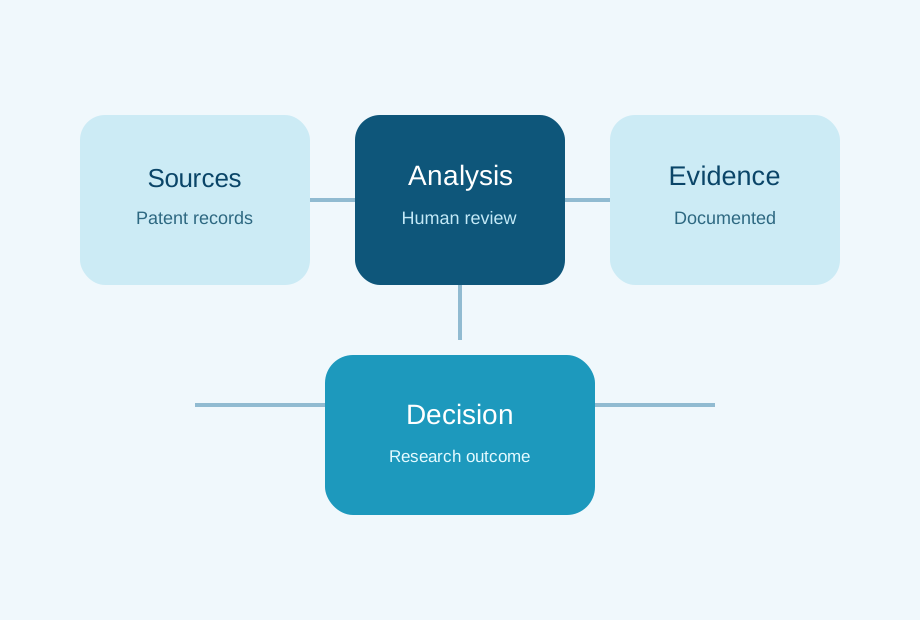
Human review should follow risk, not a decorative 'human in the loop' label. An assistant can prepare a research memo but may not be authorized to send an external legal opinion. Define the circumstances requiring a second reviewer, mandatory primary-source verification, rejection or escalation. The user interface should show supporting documents, confidence limitations and unresolved fields. Track whether reviewers meaningfully changed decisions or merely rubber-stamped machine suggestions. Assign responsibility for final outcomes to a named role within the organization. Evidence checkpoint: Assign a qualified reviewer to high-consequence decisions and record when they reject unsupported machine-proposed conclusions. Record both supporting and adverse materials. An unexplained gap or contradiction is a reason to narrow the claim, not to add confident wording to an informational webpage.
Adoption, training and measurement
Adoption requires training, feedback and workflow incentives. Users may abandon a tool that adds review work without reducing burdens, or overtrust one that produces fluent but inaccurate text. Run a pilot in a bounded team with explicit permitted use cases and prohibited autonomous actions. Collect structured feedback and observe changes in rework, task completion and verification burden. Governance must extend beyond launch day to incidents, staff turnover, new source collections and version changes. Avoid suggesting that one workshop delivers enterprise-wide transformation. Evidence checkpoint: Compare rework and verification effort in controlled pilots and maintain an incident and user-feedback register. Use a source date and relevant geography when the legal or operational position can change. An old document may be valuable history but should not be presented as a current certification.
Pilot-to-production decisions
Move from pilot to production only after thresholds for quality, security, access, integration and operational ownership are met. Define rollback steps and a non-AI fallback when source retrieval or model service fails. A pilot that succeeds with clean documents may still fail on noisy contracts or multilingual records. Compare assisted and existing workflows under the same review criteria. The decision record should explicitly allow 'do not automate this task'; selecting the wrong task can create more downstream risk than operational benefit. Evidence checkpoint: Define rollout thresholds, rollback procedure and accountable owners, allowing a defensible decision not to automate unsuitable tasks. Connect the outcome to a concrete next action: search a claim, change a document, test a control or ask for specialist review. A general statement of importance is not enough.
Original analytical framework and decision implications
An original use-case readiness matrix scores each workflow on verified task volume, evidence quality, privacy risk, consequence of error, reversibility and availability of a qualified reviewer. A complementary control-to-test matrix links each risk to an actual test and the accountable owner. These tools support conditional go/no-go decisions without unsupported ROI claims. Where data is missing, mark 'not evaluated' rather than forcing a high or low numerical score.
How to commission a reproducible evidence review
A useful research commission on AI adoption has a narrow scope: What changes should an enterprise prioritize when introducing AI into knowledge-heavy service workflows?. The analyst should first establish the evidence relevant to process baseline and decision rights and model evaluation and quality gates, then test data controls and security and human review and escalation against competing evidence. Only after those records are compared should the report address adoption, training and measurement and pilot-to-production decisions. The inquiry should record source identities, dates, assumptions, and contradictory documents. This order matters: a positive finding from one database, a promotional description, or an attractive technical diagram cannot resolve an unknown legal condition. Where the evidence is incomplete, the proper output is an explicit next search or test rather than a confident result.
Evidence register and research deliverables
A practical deliverable for AI adoption is a dated source-to-claim or source-to-control register, with one row for each of the six questions above. The first field records the proposition being tested; the second links to the primary evidence, and the third states what alternative explanation has been considered. For this page, the proposed distinctive output is: Use-case readiness matrix pairing operational impact with evidence and controls. A research packet should also record which evidence is missing and who is authorized to make the consequential decision. The source hierarchy should start with NIST AI RMF, then use technical publications and comparable records to interpret—not replace—the primary evidence. The resulting report should make the boundary between historical narrative, observed technical facts, legal interpretation and untested commercial hypotheses plain to readers.
Sources and verification boundaries
The following are authoritative sources or official discovery portals for the relevant methodology. A patent-office search portal is not itself evidence that any named patent currently remains in force. Claims about an individual case require its underlying file.
- https://www.nist.gov/itl/ai-risk-management-framework
- https://www.nist.gov/publications/artificial-intelligence-risk-management-framework-generative-artificial-intelligence
Related research
- Patent Research — main hub
- Research and consulting services
- Patent and technology commercialization research
- Patent research evidence and classifications
- Technology law and research
- Patent Portfolio Strategy — GIPResearch.com
- How to File a Patent for Chemical Innovation: Evidence and Research Strategy — GIPResearch.com
Author and disclaimer
Research editorial draft for GIPResearch.com. The site is an information and research platform. This article is not personalized legal advice, a current patent-register certificate, a freedom-to-operate opinion, or a guarantee of any regulatory or commercial result. Verify material claims with current primary records. Full disclaimer.
Research checklist: what to verify before you decide
Use this checklist to assess the evidence behind transforming ai business landscape with ai strategy consulting rather than relying on a single summary or marketing claim.
- Process baseline and decision rights
- Model evaluation and quality gates
- Data controls and security
- Human review and escalation
- Adoption, training and measurement
- Pilot-to-production decisions
- Original analytical framework and decision implications
- How to commission a reproducible evidence review
Official sources and research starting points
These are research starting points. Specific factual and legal conclusions require checking the underlying documents and dates.
 How to patent fintech inventions
 Gen AI Innovations
 What is Extended Reality
 How to patent artificial intelligence based innovations
 Patent claim drafting