

Data Licensing Agreements for AI: A Comprehensive Guide — research and evidence
Training, fine-tuning, retrieval and evaluation
Model pretraining may involve repeated use of large datasets, whereas fine-tuning targets particular tasks or domains. Retrieval-augmented generation may store indexed excerpts and serve them during queries, while evaluation may retain prompts and model outputs. These technical uses have different copying, access, retention and security characteristics. Verification focus: Define every operation in a schedule with data flows and expected outputs. Decision implication: Avoid treating permission to view documents as permission to train or redistribute a model.
Source provenance and rights hierarchy
Datasets may combine owned works, contractor materials, licensed databases, public records and personal information. Different contractual and statutory rights can attach to each layer. A licensor should document acquisition, consent where required, third-party restrictions and whether derivatives are already encumbered. “Publicly accessible” is not equivalent to “unrestricted for every AI use.” Verification focus: Build record-level provenance for critical datasets and identify missing licences or permissions. Decision implication: The strongest agreement starts from rights actually demonstrated, not an absolute warranty unsupported by records.
Primary evidence starting point: US Copyright Office: Copyright and Artificial Intelligence. Where a source is a registry gateway, it establishes the verification route, not a verified finding on a named patent.
Grant scope, outputs and derivatives
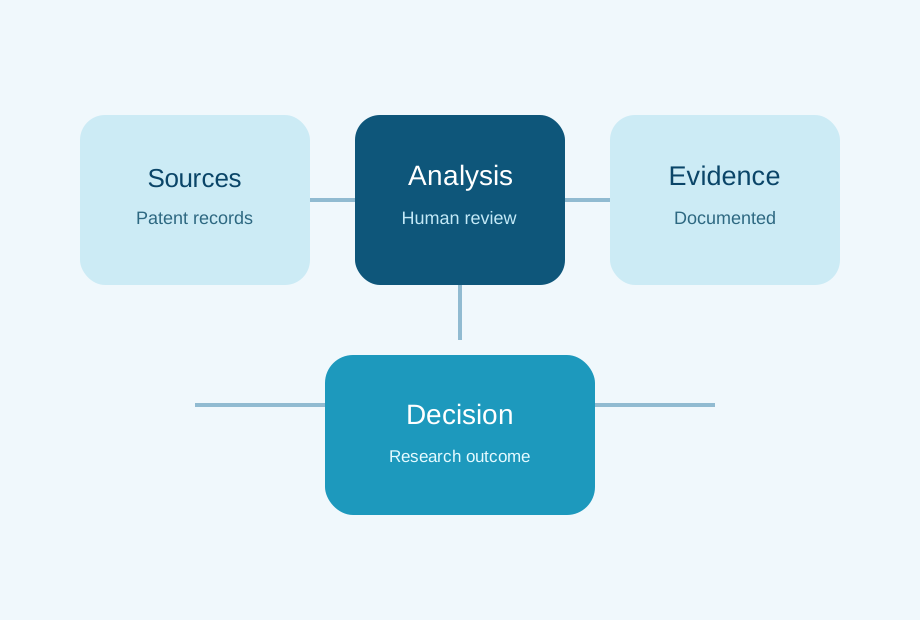
The contract should specify permitted purposes, model types, territories, users, sublicensing, caching and output use. Derivative databases, embeddings, checkpoints and fine-tuned models may require separate treatment. A grant to analyze data for internal search does not inherently authorize publishing excerpts to paying customers. Verification focus: Map each licence verb to the technical pipeline and likely downstream recipients. Decision implication: Ambiguous output ownership can create major operational disagreement long after delivery.
Privacy, confidentiality and onward transfer
Personal data and confidential business information may be present even in a valuable technical corpus. Privacy laws can impose a separate lawful-basis analysis, while contractual secrecy obligations may restrict model-provider logging and support access. Cloud processors, subcontractors and cross-border storage need to be identified in the data-flow record. Verification focus: Verify processor terms, retention, deletion, confidentiality and incident-reporting procedures. Decision implication: Privacy and security commitments should match deployed infrastructure, not remain abstract legal statements.
Exclusivity, sublicensing and model lifecycle
A licensor may offer exclusivity by industry, use case, territory or time, while retaining other exploitation rights. The contract should address whether derived model weights, embeddings or performance evaluations can survive termination. Sublicensing to third-party model providers must be expressly considered where technically necessary. Verification focus: Document who may access each derivative and the effect of expiry or termination. Decision implication: Narrow and clear rights can be more administrable than a broad grant full of exceptions.
Unsettled copyright questions
Copyright and AI training remain subjects of legal and policy development, including the US Copyright Office’s multipart AI work. A contract should not assert that all unlicensed model training is lawful or unlawful everywhere. Legal positions may vary with source material, jurisdiction and the exact uses undertaken. Verification focus: Identify contested issues separately from statutory text and established licence permissions. Decision implication: Use adaptable representations and change-control obligations rather than unsupported absolutes.
Audit and exit mechanics
An auditable agreement connects each dataset to provenance, permitted use, logs, model versions, security controls and return or deletion duties. Termination may require a practical treatment of cached indexes, backups and trained artifacts. Audit rights must be scoped so that verification can occur without disclosing another party’s confidential information. Verification focus: Specify evidence retention, reporting intervals, remediation procedures and technical feasibility limits. Decision implication: The final deliverable should allow compliance teams to test contractual obligations against actual systems.
Worked research example (illustrative)
Consider a hypothetical legal-research vendor licensing a corpus of annotated contracts for retrieval and model evaluation. The vendor can lawfully access some documents under customer agreements, but those agreements may not allow training a general-purpose model. If the dataset includes employee or client information, privacy and confidentiality rules apply independently of copyright licensing. The contract should therefore separate indexing and retrieval rights from fine-tuning, output publication and onward transfers. This scenario demonstrates why a broad “all AI uses” clause may not reflect the technical deployment or the rights held by the supplier.
Original evidence and comparison matrix
An original licence-rights matrix should include source dataset, ownership basis, approved model use, storage region, processor, derivative artifact, permitted recipients, deletion obligations and audit evidence. The table would show, for instance, that a dataset approved for internal search may not be approved for public model training or resale. Each line needs a traceable source record and a clear response when the provenance is disputed. This design also exposes whether a processor’s retention policy conflicts with a promised deletion timeline. The aim is operational testability rather than decorative contractual language.
Counterevidence, limits and next research decision
The risk analysis should distinguish settled contract restrictions from contested legal questions. The US Copyright Office’s AI initiative provides useful policy context but does not itself settle every training-use dispute. Technical controls must be feasible: deleting a retrieval index is different from reversing a model’s historical training influence. A contract should specify the practical treatment of backups, models, embeddings and aggregate evaluation findings on termination, with any limits stated precisely. The resulting research should help parties negotiate rights they can actually monitor and enforce.
Research evidence-quality and publication controls
Evidence standard and reproducibility. Trace licence permissions to each dataset, model training or retrieval operation, processor and output artifact. The primary documents should be identified by issuing institution, title or record number, and the date on which their contents were checked. Two apparently consistent secondary descriptions are not independent confirmation if they reproduce the same earlier article. Any comparison should use equivalent technical or legal units, and preserve adverse facts rather than selecting only supportive passages.
What would change this analysis? A supplier may lack onward-training rights, and untested deletion clauses may be technically impossible for certain model artifacts. This possibility should be recorded in a dedicated contrary-evidence column, together with the source needed to investigate it. When a claim depends on an unverified record, it must remain an explicit research hypothesis.
Decision use. Draft a rights-and-controls matrix with explicit exceptions rather than relying on generic ownership or fair-use assurances. Keep an audit trail connecting the source, the exact statement, the reader's decision and the remaining limitation. No generalized content strategy should obscure the independent user need of this protected URL.
Primary sources and verification boundaries
Source limitation: This article uses primary legal, patent, classification or platform materials where available. A primary-source gateway is not proof of any named patent’s current grant, title, claim scope or enforceability. The original WordPress article is retained in an editorial archive, not treated as authority for unverified legal claims.
General research information; not a legal opinion, patent validity opinion, regulatory clearance, or guarantee. Read the disclaimer
References and primary sources
- WIPO — PCT Frequently Asked Questions, updated August 2026. Official PCT procedure guidance.
- WIPO — PCT Applicant’s Guide, effective 23 April 2026. Official PCT applicant guide.
General research only. Any current grant, claim, ownership, legal status or professional opinion requires verification of official records and the facts of the particular matter. Full disclaimer
 How to patent fintech inventions
 Gen AI Innovations
 What is Extended Reality
 How to patent artificial intelligence based innovations
 Patent claim drafting