

Trademark Monetization Commercialization — research analysis
Title and register status
Title review starts with the register, current proprietor, classes, territorial scope, pending renewals, recorded transfers and any coexistence obligations. A business may promote a brand without owning every logo variant, domain name or related mark used in trade. Review assignments, employment-created designs, joint ventures and affiliate use. Trademark records are jurisdictional; an international registration administered by WIPO has country-specific legal outcomes. A purchaser needs a reproducible ownership chain for the exact signs and activities it plans to acquire or license. Evidence checkpoint: Reconcile registered proprietor, assignments and geographic coverage for every licensed word or device mark. The record should include its issuing body, date, context and exact language. Where sources diverge, identify the conflict before converting this observation into a technical or legal conclusion.
Scope of goods/services
The specification of goods and services matters. A registration for one set of products may not cover all intended uses in a proposed new distribution agreement. Brand recognition in a new sector is not the same as a legal entitlement to prevent another trader's use. Conduct a class, similarity and use-evidence review across target channels. Compare word marks, stylized logos and trade dress as separate assets where appropriate. A brand extension may require additional clearance or filing rather than only an amended commercial license. Evidence checkpoint: Compare the actual class specification and use evidence with the territory and channels in the transaction proposal. Compare the result with a plausible alternative explanation, since similarity of terms is not proof of equivalence. A reviewer should be able to repeat the comparison using the same underlying material.
Licensing quality-control considerations
Licensing arrangements should address permitted territory, channels, product quality, approved presentation, marketing claims and inspection rights. The purpose of controls is to preserve coherent use and avoid reputational or legal damage, not simply to impose administrative restrictions. Specify responsibility for product compliance, consumer complaints and infringement monitoring. Poorly documented affiliate use can complicate later evidence of trademark use. Neither an exclusive license nor a franchise agreement should imply ownership transfer unless the legal instrument actually grants it. Evidence checkpoint: Document quality approval, inspections, brand guidelines and responsibility for defective goods in any contemplated licence. Retain the actual technical document or contractual clause supporting the finding. The decision-maker needs to know whether this is a binding limitation, a design option, or an unsupported assertion.
Territory and channel restrictions
Territorial and channel limits shape value. Online sales may cross borders where different registrations, local languages and authorized distributors matter. A licence for retail stores does not necessarily permit marketplace sales or sublicensing to a manufacturer. Define channels and the consequences of a new service category. Where a transaction includes names, software, patents or customer data, treat each asset under its own rights analysis. Trademark protection alone does not create rights to all associated content, technology or personal information. Evidence checkpoint: Test distributor, ecommerce and sublicense permissions instead of assuming a general licence covers all routes to market. Record both supporting and adverse materials. An unexplained gap or contradiction is a reason to narrow the claim, not to add confident wording to an informational webpage.
Valuation approaches and evidence
Valuation analyses may consider relief-from-royalty, comparable arrangements and income approaches, but each depends on dependable commercial inputs. Do not infer a specific royalty rate from brand popularity, social reach or an unverified comparable transaction. Distinguish the legal strength of a mark from the enterprise's operational ability to monetize it. A famous mark with uncertain title or limited territorial coverage may present transaction risk; a modest but well-documented niche mark can still have a plausible licensing role in a defined field. Evidence checkpoint: Keep valuation scenario assumptions distinct from verified trademark title and legal enforceability. Use a source date and relevant geography when the legal or operational position can change. An old document may be valuable history but should not be presented as a current certification.
Enforcement and encumbrances
Enforcement and encumbrances affect transaction terms. Pending oppositions, rectification, non-use concerns, coexistence agreements, liens, past infringement allegations or conflicting marks should be documented. A buyer may seek warranties, limited indemnities or post-closing cooperation, but their suitability depends on negotiation and governing law. Establish who monitors unauthorized uses and who can sue or settle. Commercial confidence comes from accurate risk disclosure, not an assertion that a registered mark is immune to challenge. Evidence checkpoint: Record pending non-use, rectification or coexistence constraints and allocate monitoring and enforcement duties. Connect the outcome to a concrete next action: search a claim, change a document, test a control or ask for specialist review. A general statement of importance is not enough.
Original analytical framework and decision implications
The proposed commercialization matrix lists each mark, territory, class, evidence of use, title documents, known challenges, permitted channel and proposed deal structure. Its companion contract checklist maps quality control, sublicensing, reversion and enforcement duties to the relevant party. These tools distinguish the existence of an IP registration from unproven revenue forecasts. No transaction value or commercial return is stated without project-specific evidence.
How to commission a reproducible evidence review
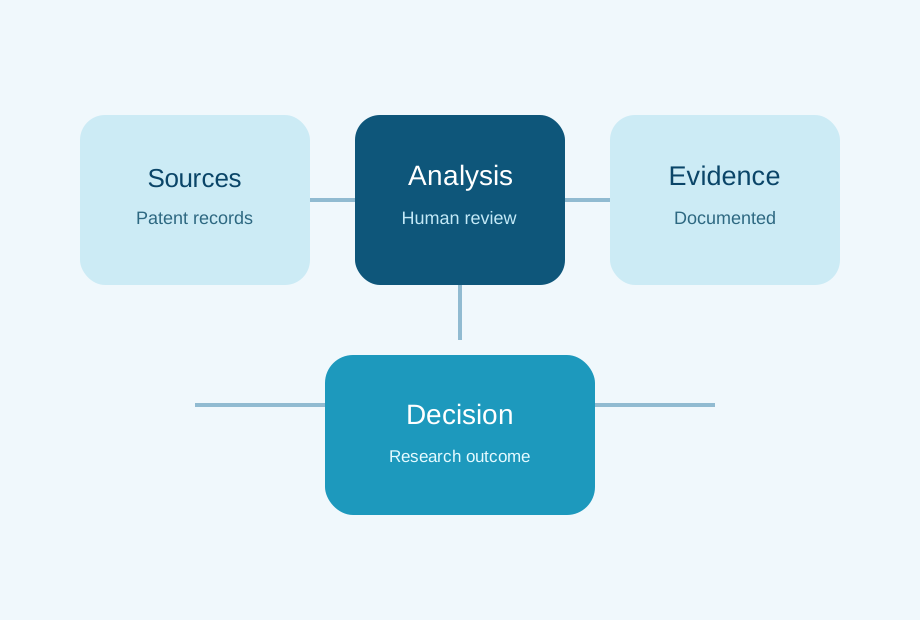
A useful research commission on trademark licensing has a narrow scope: Which conditions make a trademark suitable for licensing, assignments and strategic brand transactions?. The analyst should first establish the evidence relevant to title and register status and scope of goods/services, then test licensing quality-control considerations and territory and channel restrictions against competing evidence. Only after those records are compared should the report address valuation approaches and evidence and enforcement and encumbrances. The inquiry should record source identities, dates, assumptions, and contradictory documents. This order matters: a positive finding from one database, a promotional description, or an attractive technical diagram cannot resolve an unknown legal condition. Where the evidence is incomplete, the proper output is an explicit next search or test rather than a confident result.
Evidence register and research deliverables
A practical deliverable for trademark licensing is a dated source-to-claim or source-to-control register, with one row for each of the six questions above. The first field records the proposition being tested; the second links to the primary evidence, and the third states what alternative explanation has been considered. For this page, the proposed distinctive output is: Commercialization decision matrix separating registered rights from business projections. A research packet should also record which evidence is missing and who is authorized to make the consequential decision. The source hierarchy should start with WIPO trademark and technology-transfer resources, then use technical publications and comparable records to interpret—not replace—the primary evidence. The resulting report should make the boundary between historical narrative, observed technical facts, legal interpretation and untested commercial hypotheses plain to readers.
Sources and verification boundaries
The following are authoritative sources or official discovery portals for the relevant methodology. A patent-office search portal is not itself evidence that any named patent currently remains in force. Claims about an individual case require its underlying file.
- https://www.wipo.int/en/web/madrid-system/how_to/file/index
- https://www.wipo.int/en/web/technology-transfer/agreements
Related research
- Patent Research — main hub
- Research and consulting services
- Patent and technology commercialization research
- Patent research evidence and classifications
- Technology law and research
- Trademark Classes — GIPResearch.com
- Trademark Opposition — GIPResearch.com
- Trademark Clearance Search — GIPResearch.com
Author and disclaimer
Research editorial draft for GIPResearch.com. The site is an information and research platform. This article is not personalized legal advice, a current patent-register certificate, a freedom-to-operate opinion, or a guarantee of any regulatory or commercial result. Verify material claims with current primary records. Full disclaimer.
Research checklist: what to verify before you decide
Use this checklist to assess the evidence behind trademark monetization commercialization rather than relying on a single summary or marketing claim.
- Title and register status
- Scope of goods/services
- Licensing quality-control considerations
- Territory and channel restrictions
- Valuation approaches and evidence
- Enforcement and encumbrances
- Original analytical framework and decision implications
- How to commission a reproducible evidence review
Official sources and research starting points
These are research starting points. Specific factual and legal conclusions require checking the underlying documents and dates.
 How to patent fintech inventions
 Gen AI Innovations
 What is Extended Reality
 How to patent artificial intelligence based innovations
 Patent claim drafting