
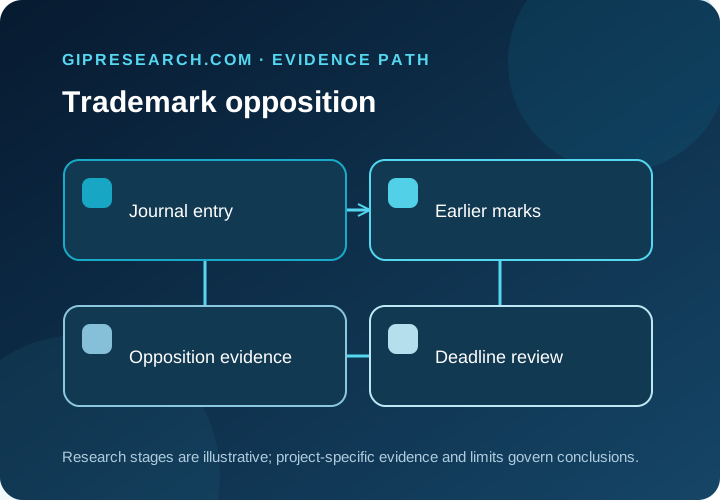
Trademark Opposition — research analysis
What does an Indian trademark opposition involve?
A trademark opposition is a formal challenge to a published application before registration, based on the grounds available under Indian trademark law. The event occurs at a distinct stage from an examination objection raised by the Registry and from a challenge to an already registered mark. The research task is to identify the advertised application, the relevant rights and grounds, the applicable filing window and the evidence that supports or weakens the challenge. Section 21 of the Trade Marks Act, 1999 provides the statutory framework; the Trade Marks Rules, 2017 specify filing and evidence requirements. General explanations should not be treated as procedural instructions for a particular active deadline.
Rule 42 establishes the filing period
Under Rule 42(1) of the 2017 Rules, notice of opposition in Form TM-O is filed within four months from the date of publication in the Trade Marks Journal in which the application was advertised or re-advertised. The first verified fact is therefore the particular Journal publication date, not an estimate based on when a party first learned of a competitor's application. Record the advertisement page, application number, mark, classes, goods and services and relevant applicant. Keep evidence of the retrieved Journal record because a wrong publication date can change the entire workflow.
Opposition grounds require more than similarity in spelling
An opponent may rely on earlier trademark rights and other grounds permitted by statute, but a comparison should address the marks, goods or services, relevant consumers and available evidence. Consider visual, phonetic and conceptual similarities alongside market context, distinctiveness and the chronology of use or registration. A matching word in a different market is not, by itself, a complete infringement or opposition conclusion. Likewise, an unregistered prior user's evidence may require special analysis. The case file should identify each legal proposition separately: existing right, relevant priority, the contested application and why the applicable statute might support refusal. Avoid making an absolute claim that every similar name can be blocked.
Evidence preparation and verification
A robust opposition packet includes trademark search results, copies of earlier registration or application records, publicity and trading evidence where relevant, dated advertisements, invoices or promotional materials, company identity evidence and the published contested application. Each piece should be connected to a particular factual proposition; simply attaching many files is not a substitute for proof. For digital records, preserve dates and sources. Where claims concern reputation, geographical reach or prior use, the evidence should correspond to the relevant period and markets. Verify whether foreign registrations or business-name records have the legal significance asserted. A legal-research report should distinguish documentary facts from allegations and from the grounds counsel may ultimately advance.
Counterstatement and service requirements
Rule 44(1) provides that the applicant's counterstatement in Form TM-O is to be sent within two months from receipt of the copy of the notice of opposition from the Registrar. The counterstatement should set out facts admitted and contested. The service date matters as much as the publication date did for the opponent. The Rules separately govern verification and service of copies. A publication schedule should therefore track at least two independent clocks: the opponent's Journal-based filing period and the applicant's service-based response period. Different documents initiate different obligations; collapsing them into one generic “four-month trademark opposition deadline” creates avoidable risk. https://ipindia.gov.in/tm-rules-2017
The evidence sequence under Rules 45–47
After the counterstatement, the Rules outline evidence stages. Rule 45 addresses evidence in support of the opposition or an intimation that the opponent will rely on pleaded facts; Rule 46 addresses the applicant's evidence; and Rule 47 allows the opponent's reply evidence. The stated periods and applicable service triggers require careful diarization. Missing a prescribed evidence step can have serious procedural consequences. A working timeline should list event, party responsible, triggering service, relevant rule, proposed evidence and confirmation of filing or delivery. The current Rules also contain provisions on translation and hearings, so parties with foreign-language documents or complex technical evidence should plan accordingly. No single generic timeline should replace a case-specific procedural diary.
Research decision matrix for applicant and opponent
An opponent should ask whether the asserted earlier right is sufficiently documented, whether the application is genuinely close in the relevant goods or services and whether the evidence supports the intended grounds. An applicant should ask which allegations are admitted, what priority or use evidence counters the challenge, and whether narrowing goods or other lawful options may resolve the dispute. Both sides should assess the likely burden of evidence and available procedural resources. The research matrix can mark each proposition as supported, disputed, unsupported or requiring external counsel interpretation. This is more useful than assuming that filing an opposition guarantees refusal or that a filed counterstatement guarantees registration.
Opposition differs from post-registration action
A proposed mark may face a registry examination objection without any third-party opposition, and a registered mark may later face rectification or other challenges under separate provisions. An opposition guide should explain the procedural stage rather than use all challenges interchangeably. Monitoring the Trade Marks Journal helps identify future opposition opportunities, while trademark portfolio maintenance requires continued tracking after registration. Companies with multiple brands and related entities should unify mark, applicant and proprietor names across records. Internal inconsistency can complicate an evidence packet, particularly when assignments or changes of name occurred after the initial use relied upon.
Common errors in opposition research
Recurring mistakes include using a date from an online status page instead of the Journal publication, relying on a historic rule without checking amendments, confusing the application class with the detailed goods and services, and presenting an assertion of reputation without dated evidence. Another error is assuming that an online status label communicates every filing or hearing event. Preserve the official docket history, check notices and service, and distinguish procedural status from substantive merits. Avoid public claims that any party is “infringing” or acting in bad faith unless the evidence and legal analysis justify such language. A balanced research document should address material weaknesses on both sides.
The final trademark-opposition dossier
A decision-ready dossier should include the application and journal identifiers; current status; the precise opposition period calculation; legal grounds considered; earlier rights; evidence list; differences among marks and goods; procedural calendar; counterstatement and evidence-stage triggers; and recommendations for specialist legal review. A concise chronology alongside an evidence-to-ground matrix makes the work easier to verify and update. The output should be dated, distinguish source facts from legal inference and link to the relevant provisions of the Trade Marks Rules, 2017. For a potential opponent, the main decision is whether the available facts justify a properly supported challenge; for an applicant, whether the allegations can be answered within the actual timetable. Neither decision should rely on the original article's outdated timing statement.
Official and primary references
Check the applicability, dates and limitations of cited official materials for your own facts.
This article provides general research information. A reliable project conclusion requires current official records, jurisdiction-specific analysis and verification of the particular documents or facts. Full disclaimer
 How to patent fintech inventions
 Gen AI Innovations
 What is Extended Reality
 How to patent artificial intelligence based innovations
 Patent claim drafting